
MYLES MORGAN - "Road Sign" - Myles Morgan Music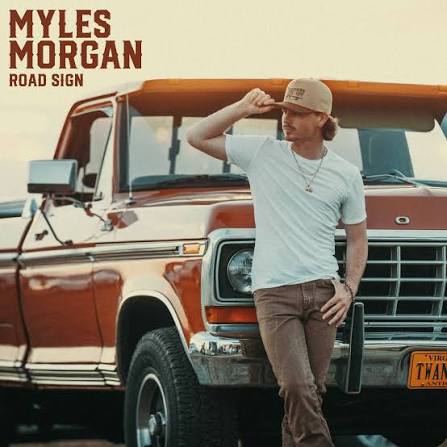
With the engine running and the past still in the rearview, Myles Morgan finds the emotional crossroads at the center of "Road Sign." The track turns a familiar country image—the endless highway—into something far more complicated than a getaway. It becomes a place where regret, hope, and unanswered questions all share the same stretch of pavement. Morgan’s latest release captures the restless feeling of searching for a way forward while knowing some memories refuse to disappear simply because the miles keep adding up.
Written by Morgan alongside Nashville songwriter Rhett Akins, "Road Sign" finds its strength in the emotional space between wanting to move on and still being haunted by what came before. The song does not present healing as an instant transformation. Instead, it captures the complicated reality of trying to outrun memories, knowing that distance can help, but it cannot always erase what is left behind.
That idea gives the track its emotional pull. The highway becomes more than a setting—it becomes a reflection of the narrator’s state of mind. Every exit, mile marker, and turn in the road carries the possibility of change, even if the memories he is trying to leave behind continue following every mile. It is a classic country concept, but Morgan approaches it with enough honesty and urgency to make it feel immediate.
Musically, "Road Sign" matches that sense of motion. Produced by Clayton Collins and Dalton Wixom, the track balances modern country energy with traditional storytelling instincts. The production avoids overwhelming the song with unnecessary layers, allowing the emotion behind the lyrics to remain front and center. Sharp acoustic guitar work provides the foundation, while building electric melodies add momentum and create the feeling of a long stretch of pavement opening ahead.
Morgan’s vocal performance is one of the song’s biggest strengths. His gritty, passionate delivery carries the weight of someone who is not simply singing about heartbreak but actively working through it. There is a restless quality in his voice that mirrors the song’s theme—the feeling of someone searching for clarity while still carrying the scars of what happened before. He brings enough intensity to make the song feel powerful without losing the vulnerability at its core.
One of the most compelling aspects of "Road Sign" is how it balances familiarity with individuality. Country music has no shortage of songs about leaving town, chasing a new beginning, or driving away from a painful memory. Morgan does not try to reinvent that tradition; instead, he proves why it continues to resonate. The best road songs are not really about the miles—they are about the emotions carried along the way.
The track also represents another strong step in Morgan’s developing catalog. Following releases such as "Batting 1.000" and "Wrong Kind of History," "Road Sign" further establishes him as an artist drawn to honest storytelling and guitar-driven country music. His sound reflects a connection to the genre’s traditional roots while embracing the energy and accessibility of modern country.
That balance is part of what makes Morgan an intriguing emerging voice. His path to music was built through experience, from picking up his father’s guitar after high school to performing at Gulf Coast venues while building a following one audience at a time. That sense of earned authenticity comes through in a song like "Road Sign," where the emotions feel lived-in rather than manufactured.
At its heart, "Road Sign" is a song about searching for direction when life has taken an unexpected turn. It recognizes that moving forward does not always mean forgetting the past—it means finding the courage to keep going despite it. With its strong imagery, compelling vocal performance, and carefully crafted production, Myles Morgan delivers a song that feels both familiar and fresh.
"Road Sign" is more than a breakup song or a highway anthem. It is a reminder that the road does not always provide immediate answers, but the act of searching can be what finally helps someone move forward.
(Review Written By: Chad Carlson)
Latest Updates
- Visualizer: Mitchell Tenpenny - "Ain't My Problem"
- Lyric Video: Jordan Davis - "Mess"
- Single Review: Thelma & James - “Good By Now”
- Single Review: Kameron Marlowe - “Take You Down With Me”
- Single Review: Conner Smith - “Fall Down”
- Single Review: Dustin Lynch & Ashley Cooke - “How You Been”
- Single Review: Cody Jinks & Alice Cooper - “Moving Mountains”
- Single Review: Clay Walker - “All Wrapped Up In You”
- Single Review: Hardy - “The Man In The Box”
- Single Review: Bayker Blankenship - “Make Trouble”
- Single Review: Brendan Walter - "Model Maniac"
- #throwbackthursday: Blake Shelton - "The Baby"
- Single Review: Cigarettes @ Sunset - "Carolina Shakedown"
- Music Video: Vincent Mason - "Damned If I Do"
- Visualizer: Joe Nichols - "Say La V"
- Music Video: Shinedown - "Searchlight"
- Lyric Video: Miranda Lambert & Ella Langley - "Snakeskin Boots"
- Lyric Video: Noeline Hofmann - "Wilson Silverstar 402 Blues"
- Visualizer: Erin Kirby - "Cross My Mind"
- Single Review: Jacob Hackworth - "Last Night I Got Lonely"