
MO PITNEY - "Happy Hour" - Curb Records
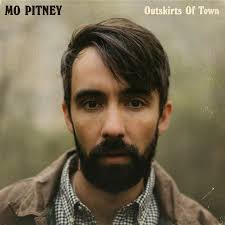
In a country format that has spent decades romanticizing the after-work barroom, Mo Pitney’s “Happy Hour” arrives with a deceptively familiar title and a quietly persuasive reversal. The phrase suggests neon light, jukebox camaraderie, and the first drink after a long shift. Pitney, however, redirects that expectation toward the driveway, the front door, and the brief evening window when family life is still awake and waiting. Released July 17, 2026, as the third advance track from his forthcoming third studio album, Outskirts of Town, the song is both an affectionate nod to traditional country craft and a statement of values from an artist whose work has often favored sincerity over spectacle.
Written by Adam Louis Wright and Clint Allen Daniels and co-produced by Pitney with Jim “Moose” Brown, “Happy Hour” is structured around one of country music’s oldest pleasures: the twist of a phrase. At first, the narrator appears to be standing at the edge of a conventional drinking song. His friends are headed to the bar, applying friendly pressure and dangling the promise of a whiskey sour, a pool table, and the easy fellowship of “the boys.” Pitney’s vocal makes the scene believable because he does not sing it with scolding distance. The narrator likes that world. He knows the sound of a stool scraping the floor and the comfort of killing time with familiar faces. The song’s moral force comes from the fact that he is not rejecting temptation because he has never loved it; he is choosing something better because he understands the cost of missing it.
That choice gives the chorus its emotional center. “Happy Hour” is less about alcohol than attention, less about abstaining than re-prioritizing. Pitney’s narrator knows that a day contains only so much usable time. Work consumes most of it, traffic and sleep take their share, and what remains becomes a test of what a person truly values. The lyric’s strongest insight is its plainest one: children grow quickly, and the long days of parenting become short years in retrospect. By turning down “high fives and the two for ones” in favor of walking into the house, setting the day down, and putting his arms around his wife, the singer frames domestic routine not as obligation but as reward.
The performance is central to why the song works. Pitney has always sounded most at home when a lyric asks for conviction rather than vocal gymnastics, and “Happy Hour” gives him a melody sturdy enough to carry sentiment without tipping into melodrama. His delivery is warm, settled, and conversational, with the kind of restraint that lets the listener believe the narrator has made this decision many times before. He is not delivering a grand revelation from a stage; he is offering the small, repeatable wisdom of a husband and father who has learned that presence is an active choice.
Musically, the track stays comfortably within Pitney’s traditional country lane while avoiding museum-piece stiffness. Dobro, pedal steel, and fiddle color the arrangement with a classic texture, but the production never crowds the lyric or forces nostalgia for its own sake. The mid-tempo pace is well chosen: unhurried enough to feel reflective, but not so slow that the song becomes sentimental wallpaper. Brown and Pitney keep the recording clean, acoustic-grounded, and emotionally direct, allowing the instruments to act like scenery around the story rather than competing voices within it.
As a piece of songwriting, “Happy Hour” succeeds because its central metaphor is immediately accessible and then gently deepened. The title does the first bit of work, inviting the listener to expect one kind of country song before revealing another. From there, the lyric builds its argument through practical details rather than heavy declarations: the limited hours in a day, the pull of friends, the kids who will not stay little forever, the wife waiting at home, the ordinary evening that becomes a “little piece of heaven.” That phrase could feel too neat in a lesser performance, but Pitney’s unfussy vocal and the track’s traditional arrangement give it enough ballast to land honestly.
The song also fits neatly into the broader portrait being drawn around Outskirts of Town. Early materials for the album point toward a slower, family-rooted sense of country living, and “Happy Hour” feels like one of the project’s clearest thesis statements. It is not chasing the polish of contemporary arena-country or the irony of retro revivalism. Instead, it trusts the old tools—story, hook, fiddle, steel, moral clarity—and uses them to describe a modern adult dilemma: how to spend the little time that belongs fully to you.
“Happy Hour” is a thoughtful, well-crafted traditional country single that earns its emotion through understatement. Its premise is simple, but its execution is graceful: a barroom title becomes a family anthem, and a familiar country setup becomes a meditation on time, priorities, and love in daily practice. With Adam Louis Wright and Clint Allen Daniels supplying a strong lyrical frame, and Pitney and Jim “Moose” Brown giving the track a tasteful, instrument-rich production, the result is one of those modest songs that grows more affecting the closer one listens. For listeners drawn to country music that honors home life without sanding off its working-day realism, “Happy Hour” is a warm and quietly memorable preview of Outskirts of Town.
(Review Written By: David Pierce)
Latest Updates
- Music Video: Luke Bryan feat. Luke Combs - "Finders Keepers"
- Lyric Video: Zach Meadows - "Backstreet Baby"
- Visualizer: Parker McCollum - "Solid Country Gold"
- Music Video: Kevin Powers - "Who’s Drinking Now"
- Visualizer: Mack Geiger - "Pouring"
- Performance Video: Zach Top - "Other Side Of Hurtin'" (Acoustic)
- Show Review: Tim McGraw Turns a Rainy Tinley Park Night into a Career-Spanning Campfire
- Show Review: 49 Winchester Bring Russell County Fire to Tinley Park
- Music Video: Mae Estes ft. Shenandoah - "Moon Over Georgia"
- Music Video: Zach John King ft. Brooks & Dunn - "Way To Go"
- Visualizer: Hudson Westbrook - "Made You Look"
- Music Video: Bryce Leatherwood - "Grain of Salt"
- Lyric Video: Ian Munsick - "Palomino Eyes"
- Music Video: Aaron Watson - "Dolly Parton Pinball Machine"
- Music Video: Chase Matthew - "Autopilot"
- #throwbackthursday: Heidi Newfield - "Johnny And June"
- Single Review: Owen Riegling - "Me Without My Hometown"
- Performance Video: Wyatt Flores - "Runnin' On E" (Live at Spotify House)
- Music Video: Avery Anna - "Blood Runs Thicker"
- Music Video: Carly Pearce & Riley Green - "If I Don't Leave I'm Gonna Stay"