
AUSTIN SNELL - "If I Were The Devil" - River House Artists/Warner Records Nashville
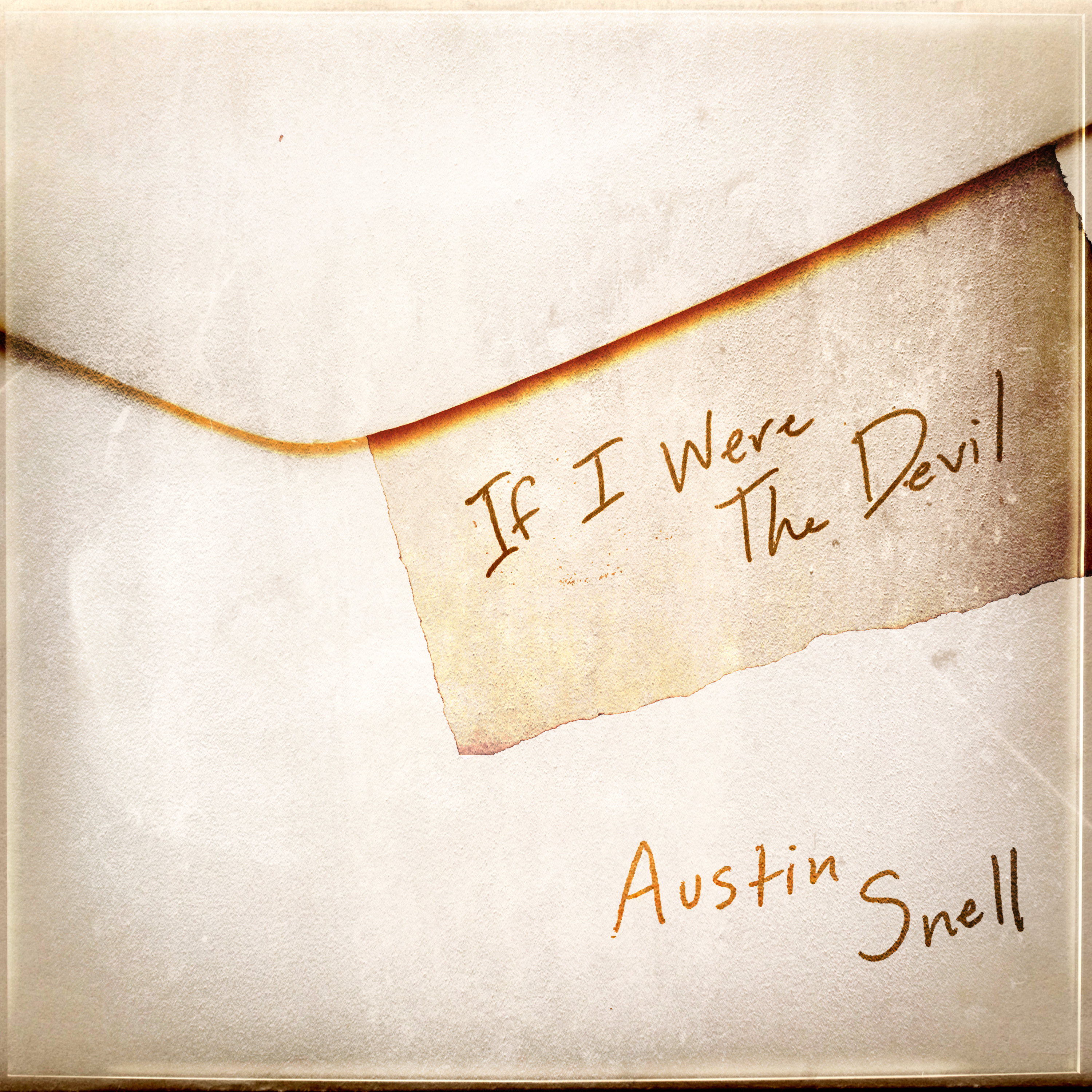
Austin Snell takes a different kind of swing on “If I Were The Devil,” a thought-provoking single that replaces sheer musical force with a sharper sense of observation. Instead of telling listeners what to believe, Snell examines the habits and tensions shaping modern life, turning his attention toward division, violence, digital distraction and the ways people can become desensitized to all three.
Released August 28 through River House Artists/Warner Records Nashville, the song was written by Snell with Dan Alley and Brent Cobb and produced by Logan Maggio. Its subject is deliberately expansive: Snell describes it as a look at the “state of the union,” but the song reaches beyond conventional political commentary. Its real concern is what happens when a culture becomes so accustomed to conflict that outrage starts to feel routine.
That broader perspective is one of the song’s greatest strengths. Snell does not position himself as an observer standing safely outside the problem. He has called the song a personal “gut check,” acknowledging that he can fall into the same patterns he is examining. That admission changes the tone considerably. Rather than delivering a verdict, he is participating in the question.
The songwriting is direct without being simplistic. Snell, Alley and Cobb build the track around recognizable pieces of modern life: scrolling through a phone, encountering disturbing news, moving immediately to the next story and watching people retreat further into opposing camps. The effect is unsettling because none of these behaviors feels particularly unusual anymore.
That familiarity gives the song its bite.
“If I Were The Devil” suggests that destructive forces would have little work to do if people continued doing the dividing themselves. It is a bleak premise, but Snell wisely avoids turning it into a theatrical sermon. The song leaves listeners with something more valuable than an easy answer: a reason to reconsider their own participation in the cycle.
Maggio’s production is equally important. Rather than leaning into the heavier side of Snell’s established sound, the arrangement gives the material room to breathe. The musical backdrop creates tension without overwhelming the vocal, allowing the song’s observations to remain prominent.
Snell responds with one of his more controlled performances. His recognizable rasp is still there, but he uses it differently. There is less emphasis on vocal muscle and more on phrasing, giving individual lines time to settle. He sounds like someone wrestling with the implications of what he is singing rather than simply trying to make a statement land.
That choice makes the recording more effective. A song about information overload and cultural exhaustion could easily become sonically overwhelming itself. Instead, “If I Were The Devil” maintains enough space for the listener to absorb its ideas.
The track also reflects an evolution already visible in Snell’s work. His official biography describes an artist increasingly interested in introspection and experimentation, and this song demonstrates how naturally that direction can coexist with his country-rock foundation. The rough edges remain, but they are being used with greater purpose.
Most importantly, Snell does not confuse seriousness with self-importance. The song tackles enormous subjects while maintaining an awareness that no individual has a complete solution. His willingness to include himself in the criticism keeps the material grounded.
That makes “If I Were The Devil” more than a commentary on a divided culture. It becomes an invitation to step outside the constant churn for a moment and consider what all that noise is doing to us.
There is no tidy resolution, and that is appropriate. Snell's goal is not to solve the problem in three minutes. It is to make the listener notice it.
By slowing down, lowering the volume and giving his questions room to linger, Austin Snell reveals a different kind of musical strength. “If I Were The Devil” is pointed without being preachy, serious without becoming overbearing and personal without narrowing its scope. It finds its impact not in telling listeners where to stand, but in asking whether we have become too comfortable standing apart.
(Review Written By: Chad Carlson)
Latest Updates
- Single Review: Brothers Osborne - “Bottle It Up”
- Single Review: Jacob Hackworth - “I Wanna Quit”
- Single Review: Chris Janson - “Don’t Tell My Wife”
- Single Review: Austin Snell - “If I Were The Devil”
- Lyric Video: Ian Munsick - "Medicine Man"
- Lyric Video: Ryan Hurd - "Glory."
- Lyric Video: Brantley Gilbert - "Sins of the Father"
- Visualizer: Emily Ann Roberts feat. Ian Munsick - "Jack & Jill Daniel's"
- Music Video: Corey Kent ft. Jason Aldean - "Rather Be Here"
- Music Video: Karley Scott Collins - "Leavin' On My Mind"
- Music Video: Chase Matthew ft. Waka Flocka Flame - "Hard Liquor"
- Lyric Video: Dillon Carmichael - "Huckleberry"
- Music Video: Brantley Gilbert - "Good Ol' Boys"
- Visualizer: Zach John King - "Run For Them Hills"
- #throwbackthursday: Jake Owen - "Eight Second Ride"
- Single Review: Tyler Braden - “Quick Fix”
- Single Review: Gavin Adcock - “Having One Now”
- Single Review: Dylan Marlowe - “No Coincidence”
- Single Review: Ty Myers feat. Carter Faith - “Always On My Mind”
- Single Review: Cole Swindell - “Bronco”