THE JACK WHARFF BAND - "Torn Up Sweater" - Big Machine Records
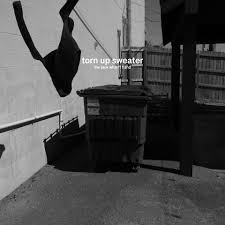
Most love songs are written from the pedestal or the gutter. "Torn Up Sweater" lives somewhere in the awkward middle, in the spot where you're trying so hard to be someone worth keeping that you start to lose track of who you were. It's a small, frank idea, and The Jack Wharff Band build a loud, rattling country-rock single around it.
The song arrived November 3, 2026 through Big Machine Records. It is also the first look at Coming Home, the band's debut album, and it introduces a group that would rather sound a little worn than too polished.
Jack Wharff opens in a rough place, "scraping by again, rusty as the bumper on this beat-up Chevy van," hanging by a thread. It doesn't ask for sympathy; it just sets the scene. Then the pre-chorus turns to the person he's afraid of disappointing: "You're so porcelain, you're so important." He's sure he's the stain on that perfect portrait. The contrast is a familiar one, but it works because the song commits to it.
The title image carries the record. He throws away the torn-up sweater, hiding the frayed parts of himself to look more grown-up than he feels, and he's been "learning how to shut my mouth" so she'll think he knows better. Then comes the ache: he knows he has to let her in, but he doesn't want to let her down.
That's the real tension. Openness and impressiveness pull in opposite directions, and the song never pretends otherwise. He even admits wanting "the easy way out," and the second verse's "I'll make it right," said three times, sounds like someone talking himself into it. The narrator is allowed to stay a bit of a mess, which makes his good intentions easier to believe.
The band calls its blend of country, rock and bluegrass-style speed "thrashgrass." Wharff sings and plays acoustic guitar, with Evan Novoa on electric guitar and backing vocals, Ryan Atchison on bass, Garrett Howell on drums and Justin Eckerd on backing vocals. The chorus is built to be shouted back by a crowd.
Wharff wrote it with Henry Harrup, Joe Clemmons and Karen Kasowski, and it never reads as sanded down by committee. Eckerd produced the single; across Coming Home, production is also credited to Eddie Spear, Pat Lyons, Brett Truitt and Evan Novoa.
The hook is the easiest thing to carry out of the room: "But I don't wanna let you down... down." A five-piece that credits its backing vocalists this carefully is clearly counting on the crowd to sing that line back, and the rough edges in the verses make the singalong feel earned rather than manufactured. It is a small thing, but it is what separates a song people admire from one they actually repeat.
There is a reason the band built its own word for this mix. "Thrashgrass" sounds like a joke until you hear how comfortably the lyric sits between a country storyteller's plain talk and a rock band's urgency. The song doesn't choose one side; it lets them rub against each other, the way the narrator's confidence rubs against his doubt.
It's not flawless. The chorus repeats three times with little change, and the lyric leans hard on its central metaphor. A bridge or a fresh angle might have given the back half somewhere to go.
It also helps that the song keeps its promises small. Nobody here is swearing to change overnight; he is trying not to hit rock bottom and trying to keep her around, and that modest goal is what gives the chorus its weight. Coming from a debut single released through Big Machine Records, that restraint stands out. The band could have reached for something bigger, and it chose to tell one small, true story instead.
As an introduction to Coming Home, "Torn Up Sweater" does its job: rowdy on the surface, a little bruised underneath, and willing to say so. It won't reinvent country-rock, but it has an honest hook and a narrator who sounds real. If the album keeps this candor, the debut could be a good one.
(Review Written By: Dave Pierce)
Latest Updates
- Single Review: Preston Cooper fest. ERNEST - "Midnight Stars And Stripes"
- Single Review: The Jack Wharff Band - "Torn Up Sweater"
- Lyric Video: U2 - "Torn" (feat. Dolly Parton)
- Music Video: Mack Geiger - "How It Ends"
- Visualizer: Greylan James - "Tennessee You Again"
- Visualizer: Brandon Lake - "Changing"
- Lyric Video: Preston Cooper - "Can't Fall For You"
- Visualizer: Spencer Hatcher - "Keep the Sad People Happy"
- Music Video: Benny G - "In The Now"
- Music Video: Shea Fisher - "What A Man Really Wants"
- Visualizer: Jackson Dean - "Blacktop Blues"
- Music Video: Brothers Osborne feat. Cody Johnson - "Born And Raised Hell"
- Single Review: Colton Dawson - “You’re Gonna Be Mine”
- Single Review: Muscadine Bloodline - “Blue Bayou”
- Single Review: Jonas Conner - “Let It Flood”
- #throwbackthursday: Luke Combs - "Hurricane"
- Single Review: Thomas Rhett - “Be There In A Minute”
- Single Review: Cody Jinks - “And, Again”
- Single Review: Walker Montgomery - “Right In The Middle”
- Single Review: Tyler Hubbard - “Playin’ It Cool”