
STEPHEN WILSON JR. - "Cørnerman" - Big Loud Records
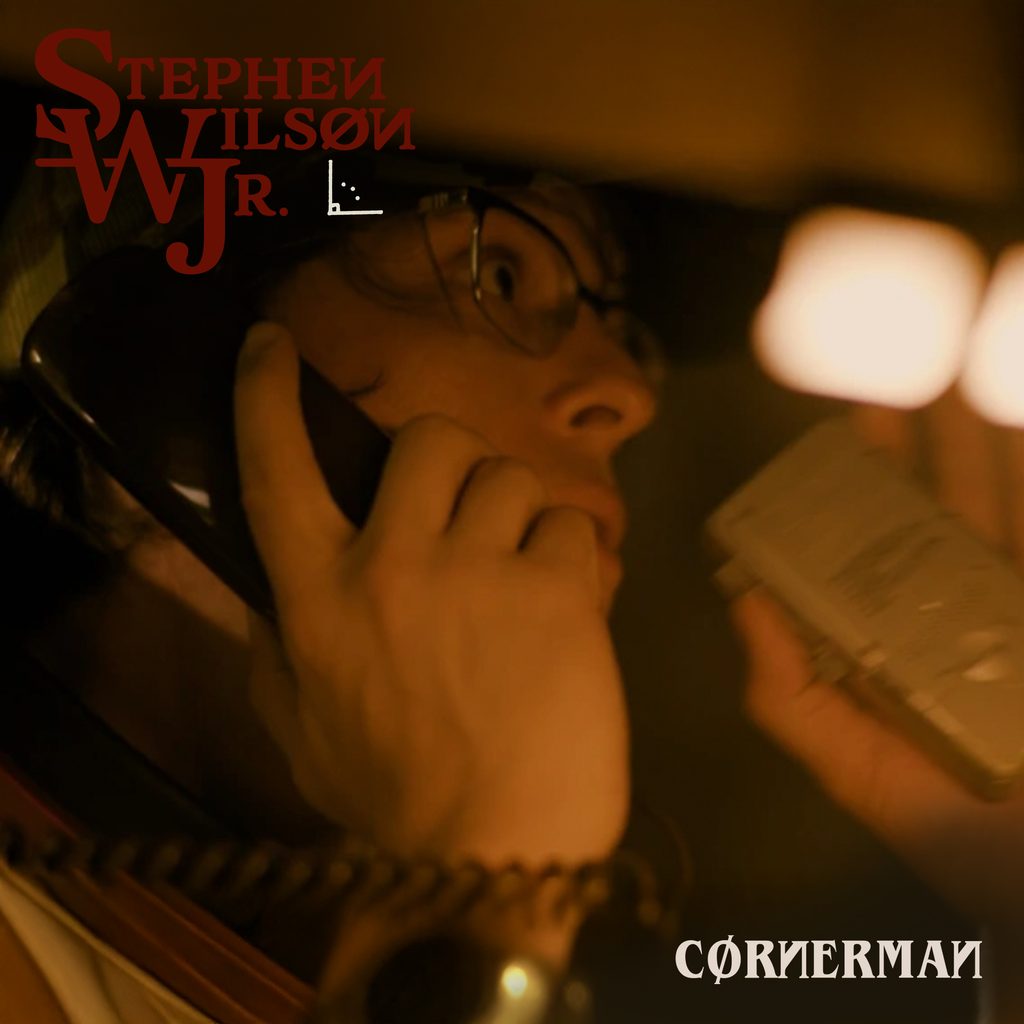
On “Cørnerman,” Stephen Wilson Jr. sounds like someone speaking to a loss he still carries in his body. He does not simply write about grief; he steps into the ring with it, gloves up, heart exposed, and voice steady enough to make the pain feel almost sacred. Released on September 15, 2026—the eighth anniversary of his father’s passing and the third anniversary of søn of dad—the song arrives with the gravity of ritual: part memorial, part confession, part late-night conversation with someone who can no longer answer back. The timing matters, but the song never leans on context as a crutch. Wilson turns a deeply personal tribute into something immediate, physical, and open-hearted, the kind of track that feels carved from one family’s history yet spacious enough for anyone who has ever wished they could hear a loved one’s voice one more time.
The boxing metaphor gives “Cørnerman” its frame, but the father-son bond gives it its pulse. Wilson’s father, an amateur boxer and two-time Indiana State Golden Gloves champion who raised him as a single parent in Seymour, Indiana, becomes more than a remembered figure; he becomes a presence at the edge of the canvas, the voice between rounds telling him to keep his hands up, breathe through the burn, stop dropping his right hand, and answer the bell. The repeated plea—“I still need you in my corner, man”—is devastating because it is so direct. Wilson does not dress the line in poetic fog. He lets it stand bare under the lights, and it lands with the blunt force of something a person has been trying not to say out loud for years.
Musically, “Cørnerman” is spare without ever feeling thin, and that restraint is one of its quiet triumphs. The acoustic framework has grit in the grain, while the upright bass gives the song a low, human pulse, like footsteps across a gym floor after everyone else has gone home. Julian Dorio’s percussion never crowds the lyric; it moves like a heartbeat and a countdown at once. Wilson and Ben West’s production wisely resists the obvious emotional swell. Instead, it lets the smaller sounds carry the weight: the space after a phrase, the tension in Wilson’s vocal, the sense of air being pulled into bruised lungs before the next round begins.
What makes the song especially powerful is its refusal to tidy grief into a clean, inspirational arc. Wilson moves from anger to disbelief to endurance, sometimes within a single phrase, and the writing gains its strength from that emotional honesty. The images are vivid because they feel lived rather than decorated: broken ribs, a ringing head, basement drills, shoulders carrying weight no one else can see. Yet beneath the impact is remarkable tenderness. This is not toughness performed for effect, and it is not easy sentimentality. It is a son using the language his father taught him because that language—jabs, bells, corners, breath—is sturdy enough to hold love and loss at the same time.
Wilson has long blurred the borders between country, folk, rock, and raw-boned Americana, and “Cørnerman” shows how naturally those instincts can serve a song when the writing is this focused. It has the narrative clarity of country music, the intimacy of a singer-songwriter confession, and the scuffed urgency of a basement rock hymn. Miles Burger’s upright bass gives the track a grounded ache, Scotty Murray’s guitar adds weathered color without pulling focus, and Pete Lyman’s master preserves the song’s closeness rather than polishing away its edges. Nothing feels overbuilt. Every musical choice seems to make the room smaller, the memory sharper, and the listener more aware of the empty space where a father’s voice should be.
That unvarnished humanity is what separates “Cørnerman” from a more ordinary tribute song. Wilson’s performance suggests a man trying to stay upright without pretending the blow did not hurt. He sings with grit, but the grit never becomes armor; it sounds more like scar tissue, proof of what has been survived rather than a shield against feeling. When he asks where his father is, the question flashes with anger, confusion, and need, but it never turns melodramatic. It feels like a private moment caught in the open, and that is precisely why it resonates.
By the final repetitions of the count-off—“jab, jab, one, two”—the song has come full circle. What began as instruction becomes inheritance: muscle memory, prayer, and a way of continuing the conversation. “Cørnerman” understands that the people who shape us do not vanish from the fight just because they are no longer standing at ringside. Their lessons become rhythm. Their voices become instinct. Their love becomes the thing that steadies the knees when the next round starts. It is a beautifully made, deeply felt single, and its hope comes not from denying grief but from honoring the bond that grief proves was real.
(Review Written By: Dave Pierce)
Latest Updates
- Single Review: 80 Acres & Wyatt Flores - "One More Hurt"
- Single Review: Stephen Wilson Jr. - "Cørnerman"
- Single Review: Gavin Adcock - "Rockstar Life"
- Music Video: Kelsey Hart - "Love To Be That Guy"
- Performance Video: Mack Geiger - "String By" (The Bonfire Sessions)
- Music Video: Luke Bryan feat. Luke Combs - "Finders Keepers"
- Lyric Video: Zach Meadows - "Backstreet Baby"
- Visualizer: Parker McCollum - "Solid Country Gold"
- Music Video: Kevin Powers - "Who’s Drinking Now"
- Visualizer: Mack Geiger - "Pouring"
- Performance Video: Zach Top - "Other Side Of Hurtin'" (Acoustic)
- Show Review: Tim McGraw Turns a Rainy Tinley Park Night into a Career-Spanning Campfire
- Show Review: 49 Winchester Bring Russell County Fire to Tinley Park
- Music Video: Mae Estes ft. Shenandoah - "Moon Over Georgia"
- Music Video: Zach John King ft. Brooks & Dunn - "Way To Go"
- Visualizer: Hudson Westbrook - "Made You Look"
- Music Video: Bryce Leatherwood - "Grain of Salt"
- Lyric Video: Ian Munsick - "Palomino Eyes"
- Music Video: Aaron Watson - "Dolly Parton Pinball Machine"
- Music Video: Chase Matthew - "Autopilot"