
THE WAR AND TREATY - "Country Baptism" - Atlantic Outpost
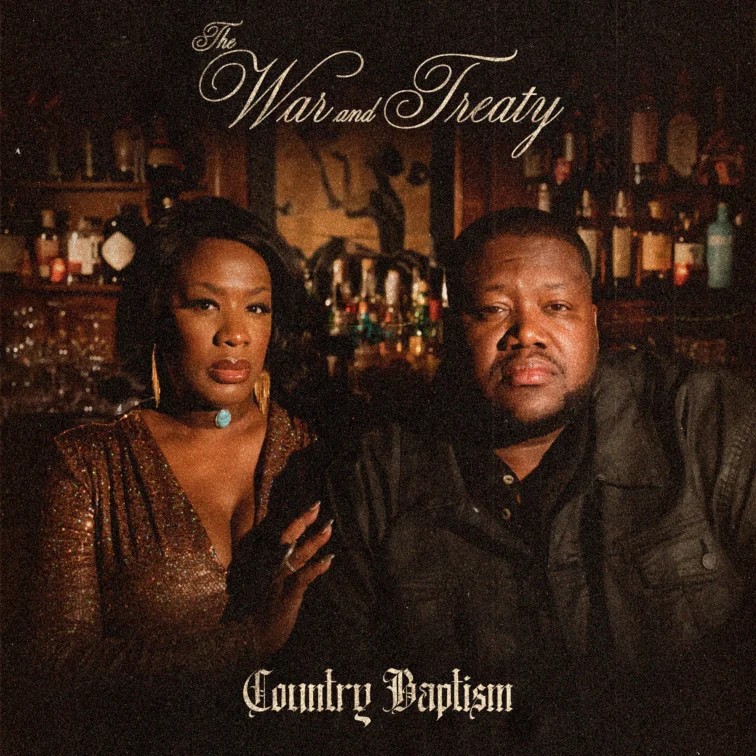
“Country Baptism” finds The War and Treaty doing what they do best: turning deeply personal experience into music that feels larger than the circumstances that inspired it. Built around the formidable vocal presence of Tanya Trotter and the distinctive delivery of Michael Trotter Jr., the song brings country, soul and gospel together in a performance marked by conviction and emotional urgency. It serves as the title track of the duo’s seven-song Country Baptism EP, released September 4 through Atlantic Outpost.
The song announces itself with purpose. Its driving rhythm creates an immediate sense of forward motion, giving “Country Baptism” the feeling of a song meant to be experienced collectively rather than quietly absorbed. There is something almost processional about its momentum—a sense of pushing ahead with strength, purpose and courage despite whatever obstacles may stand in the way. That quality provides an ideal musical foundation for the song’s central idea: transformation.
Tanya Trotter supplies much of that emotional force. Her vocals rise above the arrangement with the authority and intensity associated with gospel performance, while retaining an intimacy that keeps the song grounded. She can sound commanding without becoming distant, allowing the emotional core of the performance to remain unmistakably human.
Michael Trotter Jr. provides a compelling counterpoint. His dynamic rap verses bring rhythmic variation and an unexpected contemporary dimension to the track, demonstrating how naturally The War and Treaty can move between musical traditions. Rather than feeling like a departure from their roots-oriented sound, the rap passages complement the song’s momentum and reinforce its storytelling.
The interplay between the two performers is particularly effective. “Country Baptism” is not simply a showcase for two powerful voices; it feels like a shared declaration. Tanya’s soaring passages and Michael’s rhythmic delivery create a natural tension and release, keeping the arrangement moving while reinforcing the sense that the song emerges from a life lived together.
Lyrically, the song centers on baptism as a metaphor for emotional and spiritual renewal. The imagery of going to the river and being dipped in the water draws directly from the language and traditions of gospel music, while the declaration that love has changed the narrator forever gives that imagery a deeply personal meaning. Love becomes more than romance—it becomes a source of healing, restoration and transformation.
That interpretation is consistent with how Michael and Tanya have described the song. The duo have called “Country Baptism” a continuation of their shared story and “the truest representation of our roots,” explaining that they “poured [their] absolute souls into this sound.” The recording reflects that intention. Rather than sounding like an exercise in combining genres, it feels like a natural expression of the musical traditions and personal experiences that have shaped The War and Treaty.
The song also establishes an important emotional foundation for the EP. Alongside the title track, Country Baptism includes the previously released “It’ll Hurt Me More Than It’ll Hurt You,” as well as “Earthquake,” “Keep You Warm Tonight,” “Cowgirl Cry When Cowboys Lie” and “It Won’t Go Away,” preceded by the “Country Baptism Interlude.” Together, the track listing points toward a project concerned with emotional honesty, resilience and the complexities of love.
“Country Baptism” ultimately succeeds because its ambition is matched by its conviction. The War and Treaty bring country’s storytelling instincts, soul’s emotional intensity and gospel’s language of renewal together without allowing any one influence to overwhelm the others. Tanya’s commanding vocals and Michael’s dynamic verses give the song both gravity and movement, while its message of love as a force for transformation provides its emotional center.
It is a confident and invigorating statement from a duo who understand that roots are not simply where you come from. They are what you carry forward—and what you can build something new from.
(Review Written By: Chad Carlson)
Latest Updates
- Music Video: Tigirlily Gold - "70 And Neon"
- Single Review: Myles Morgan - "Clean House"
- Single Review: Cameron Whitcomb w/ Marshmello - "Hollow"
- Single Review: Dylan Gossett - "Clothesline"
- Visualizer: Stephen Wilson Jr. feat. Miranda Lambert - "Hardwired"
- Music Video: Tyler Nance - "Whiskey Bottle Bent"
- Music Video: Conner Smith - "Ballgame of the Radio"
- Music Video: Carly Pearce, Molly Tuttle and Dan Tyminski - "What If You Loved Me"
- Single Review: Riley Green - “That’s Just Me”
- Single Review: The War and Treaty - “Country Baptism”
- Single Review: Mitchell Tenpenny - “Gone Like That”
- Single Review: Gavin Adcock - “Anymore”
- Single Review: Corey Kent - “Everyday Life”
- Single Review: Brothers Osborne - “Bottle It Up”
- Single Review: Jacob Hackworth - “I Wanna Quit”
- Single Review: Chris Janson - “Don’t Tell My Wife”
- Single Review: Austin Snell - “If I Were The Devil”
- Lyric Video: Ian Munsick - "Medicine Man"
- Lyric Video: Ryan Hurd - "Glory."
- Lyric Video: Brantley Gilbert - "Sins of the Father"