
RILEY GREEN - "That's Just Me" - Nashville Harbor Records & Entertainment
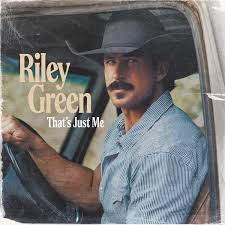
Riley Green’s “That’s Just Me” finds its emotional power in an uncomfortable truth: knowing a relationship is over does not necessarily mean the heart has caught up. The title track from Green’s upcoming album, due September 18, 2026, is a patient, inward-looking country song about what happens after the breakup, when there is no longer anything to fix but plenty left to remember.
Rather than treating heartbreak as a grand spectacle, Green keeps the song close to everyday experience. Its central character is still reaching backward, wondering about an old relationship and imagining what his former partner might be doing. The premise is familiar, but Green’s presentation gives it a lived-in quality. This is not the moment of separation; it is the quieter period when a person is left alone with the habits, memories and questions that remain.
The music reinforces that perspective. Acoustic guitar establishes the song with an unhurried simplicity, creating a foundation that leaves plenty of space around Green’s voice. Steel guitar adds a restrained country ache, while piano and percussion gradually broaden the arrangement. As the song develops, electric guitar brings additional energy without overwhelming the intimacy of the opening.
That gradual expansion is more than a production choice. It gives the recording an emotional trajectory. The song starts from a place of solitude and slowly becomes more expansive, reflecting the way a private thought can grow increasingly difficult to contain. Even as the instrumentation becomes fuller, however, the underlying feeling remains unsettled.
Green’s vocal performance is particularly well suited to that tension. He does not oversell the material or push every line toward a dramatic climax. Instead, he maintains a conversational quality that makes the narrator’s uncertainty believable. There is confidence in the restraint: Green allows the emotional details to accumulate rather than insisting that the listener feel them all at once.
The writing also benefits from its willingness to stay with contradiction. The narrator wants the relationship back, revisits what happened and continues to wonder whether the other person feels any of the same pull. At the same time, he recognizes that his attempts to reconnect may be entirely one-sided. That tension prevents the song from becoming simply a plea for another chance. It is more interested in the uncomfortable realization that sometimes the person who cannot move forward is the person doing all the looking back.
Green wrote “That’s Just Me” entirely himself, and that direct authorship complements the song’s plainspoken perspective. The writing does not require elaborate imagery to communicate its central emotion. Instead, it relies on recognizable behavior—the memories that resurface, the temptation to reach out and the hope that refuses to disappear on schedule.
The title itself becomes a concise summary of that emotional predicament. There is an element of self-awareness in the narrator’s admission that this continued attachment belongs to him. He cannot control what his former partner feels, but he can recognize what he is still carrying.
That recognition gives the song its quiet strength. “That’s Just Me” does not promise a clean resolution or pretend that acceptance arrives immediately. Its emotional endpoint is smaller and more believable: the realization that sometimes moving on begins simply with acknowledging that you are the one who is still holding on.
For a song built around loneliness, Green wisely avoids making the production feel empty. The arrangement gradually fills the space, while his vocal keeps the perspective personal. The contrast gives the track both atmosphere and momentum without sacrificing its understated character.
“That’s Just Me” ultimately succeeds because it treats heartbreak as an ongoing process rather than a single dramatic moment. Green takes a familiar country subject and approaches it with patience, letting the music and performance reveal the emotional weight gradually. The result is an intimate, polished track that demonstrates how much can be said when a song knows when not to overstate its point.
(Review Written By: Chad Carlson)
Latest Updates
- Music Video: Tigirlily Gold - "70 And Neon"
- Single Review: Myles Morgan - "Clean House"
- Single Review: Cameron Whitcomb w/ Marshmello - "Hollow"
- Single Review: Dylan Gossett - "Clothesline"
- Visualizer: Stephen Wilson Jr. feat. Miranda Lambert - "Hardwired"
- Music Video: Tyler Nance - "Whiskey Bottle Bent"
- Music Video: Conner Smith - "Ballgame of the Radio"
- Music Video: Carly Pearce, Molly Tuttle and Dan Tyminski - "What If You Loved Me"
- Single Review: Riley Green - “That’s Just Me”
- Single Review: The War and Treaty - “Country Baptism”
- Single Review: Mitchell Tenpenny - “Gone Like That”
- Single Review: Gavin Adcock - “Anymore”
- Single Review: Corey Kent - “Everyday Life”
- Single Review: Brothers Osborne - “Bottle It Up”
- Single Review: Jacob Hackworth - “I Wanna Quit”
- Single Review: Chris Janson - “Don’t Tell My Wife”
- Single Review: Austin Snell - “If I Were The Devil”
- Lyric Video: Ian Munsick - "Medicine Man"
- Lyric Video: Ryan Hurd - "Glory."
- Lyric Video: Brantley Gilbert - "Sins of the Father"