
PRESTON COOPER - "American Rust And Radio" - Blue Highway Records
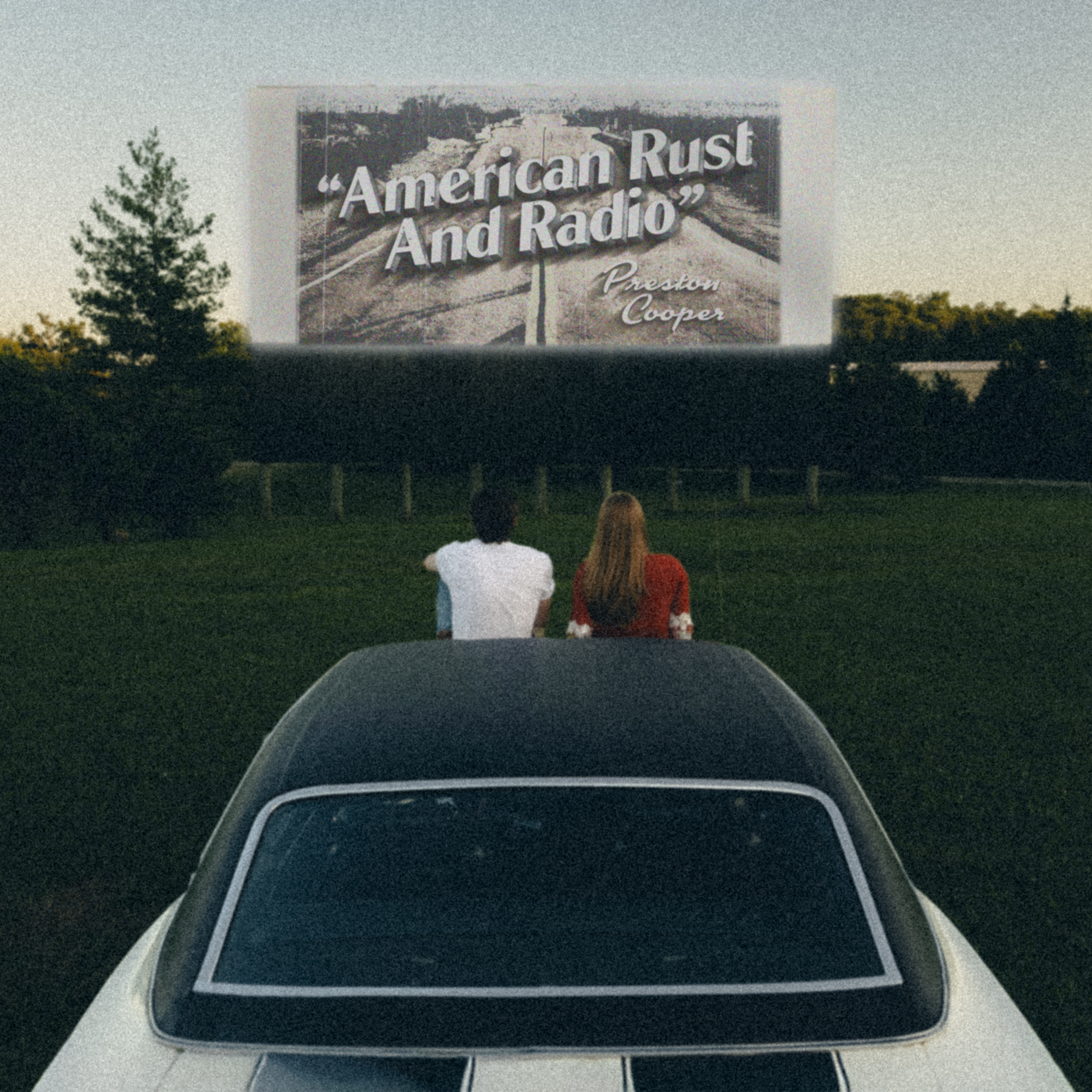
There is an easy sense of motion running through Preston Cooper’s “American Rust And Radio,” but the song is ultimately about the things that make us slow down and take stock. With its weathered imagery, open-road spirit and affection for the people and objects that accumulate meaning over time, Cooper turns a familiar country-rock framework into something personal. The result is a confident, warmly nostalgic track that celebrates what is worth keeping without pretending the past was perfect.
Released September 18 via Blue Highway Records, the feel-good country-rock single builds on the foundation of Cooper’s debut album, Toledo Talkin’. Its musical character is relaxed but substantial, settling into a laid-back groove before the guitars, bass, organ and drums give the track its broader lift. The arrangement has the open-road quality of classic heartland rock while remaining firmly connected to Cooper’s country instincts.
That blend suits the song’s subject perfectly. Cooper drew inspiration from conversations about belongings passed down through his family, including his uncle’s old rusted .30-30, pocket knives and aging cars sitting in the garage. To someone else, those things might look like clutter waiting for a trip to the scrapyard. To Cooper, they are pieces of a family story. The song takes that simple observation and applies it to romance, suggesting that wear does not automatically diminish something worth having.
There is a quiet wisdom beneath the track’s upbeat exterior. Cooper is not claiming that everything from another era was better, nor is he pretending that holding on is always easy. Instead, he recognizes that time can add character. Scratches become memories; imperfections become evidence of use; familiarity becomes its own kind of beauty. That perspective keeps “American Rust And Radio” from becoming a routine exercise in small-town nostalgia.
Cooper’s voice is what gives those ideas their weight. His distinctive grit-and-gravel delivery carries plenty of power, but there is an inviting warmth underneath it. He sounds like a singer drawing from experience rather than simply adopting the vocabulary of Americana. When the arrangement swells around him, his vocal remains remarkably clear, allowing the storytelling to stay at the center.
The writing team of Cooper, Natalie Hemby, Brad Warren and Brett Warren gives the song an abundance of recognizable imagery without making it feel crowded. Chevy chrome, roadside signs and inherited possessions are not merely decorative references; each one reinforces the central argument that some of life’s most important things are valuable because of their history. The romantic thread follows naturally, turning the song from a collection of Americana snapshots into something more personal.
Sonically, Cooper draws from a broad range of country and rock influences. His music has been shaped by artists including Chris Stapleton, Bob Seger, Bryan Adams and Nirvana, and “American Rust And Radio” reflects that eclectic foundation without sounding like an exercise in imitation. The guitars provide muscle, the rhythm section keeps the track moving and the organ adds warmth around the edges. It is polished enough for a wider audience while retaining the organic feel that gives the performance its personality.
The song is particularly fitting given Cooper’s unusual route into music. Before pursuing his career as a recording artist, he worked for the U.S. Postal Service and became known as the “Singing Mailman,” performing while completing his mail route before taking the stage after work. That history adds another layer to a song concerned with roads, persistence and the things worth carrying forward.
Following Toledo Talkin’, “American Rust And Radio” sounds like an artist becoming increasingly assured about the intersection of country storytelling and classic rock energy. It does not need to reinvent either style. Cooper’s strength lies in making familiar ingredients feel personal.
The result is a song with plenty of chrome and horsepower, but its real engine is sentiment grounded in experience. “American Rust And Radio” suggests that the marks time leaves behind are not necessarily damage to be erased. Sometimes they are the very details that make something—and the story attached to it—worth keeping.
(Review Written By: Chad Carlson)
Latest Updates
- Single Review: Presley & Taylor - “SO BADLY”
- Single Review: Preston Cooper - “American Rust And Radio”
- Single Review: The Creekers - “Better Way”
- Single Review: Morgan Wade and John Paul White - “Old History”
- Single Review: Miranda Lambert - “Two Things Can Be True”
- Single Review: Mae Estes - “You Can Feel Bad”
- Single Review: Emily Ann Roberts - “Lonely Boy”
- Single Review: Dylan Marlowe - “In This Boat”
- #throwbackthursday: Gary Allan - "Today"
- Single Review: Danielle Bradbery - “Poetic”
- Single Review: 80 Acres & Wyatt Flores - "One More Hurt"
- Single Review: Stephen Wilson Jr. - "Cørnerman"
- Single Review: Gavin Adcock - "Rockstar Life"
- Music Video: Kelsey Hart - "Love To Be That Guy"
- Performance Video: Mack Geiger - "String By" (The Bonfire Sessions)
- Music Video: Luke Bryan feat. Luke Combs - "Finders Keepers"
- Lyric Video: Zach Meadows - "Backstreet Baby"
- Visualizer: Parker McCollum - "Solid Country Gold"
- Music Video: Kevin Powers - "Who’s Drinking Now"
- Visualizer: Mack Geiger - "Pouring"