
PRESLEY & TAYLOR - "SO BADLY" - White Mustang Records
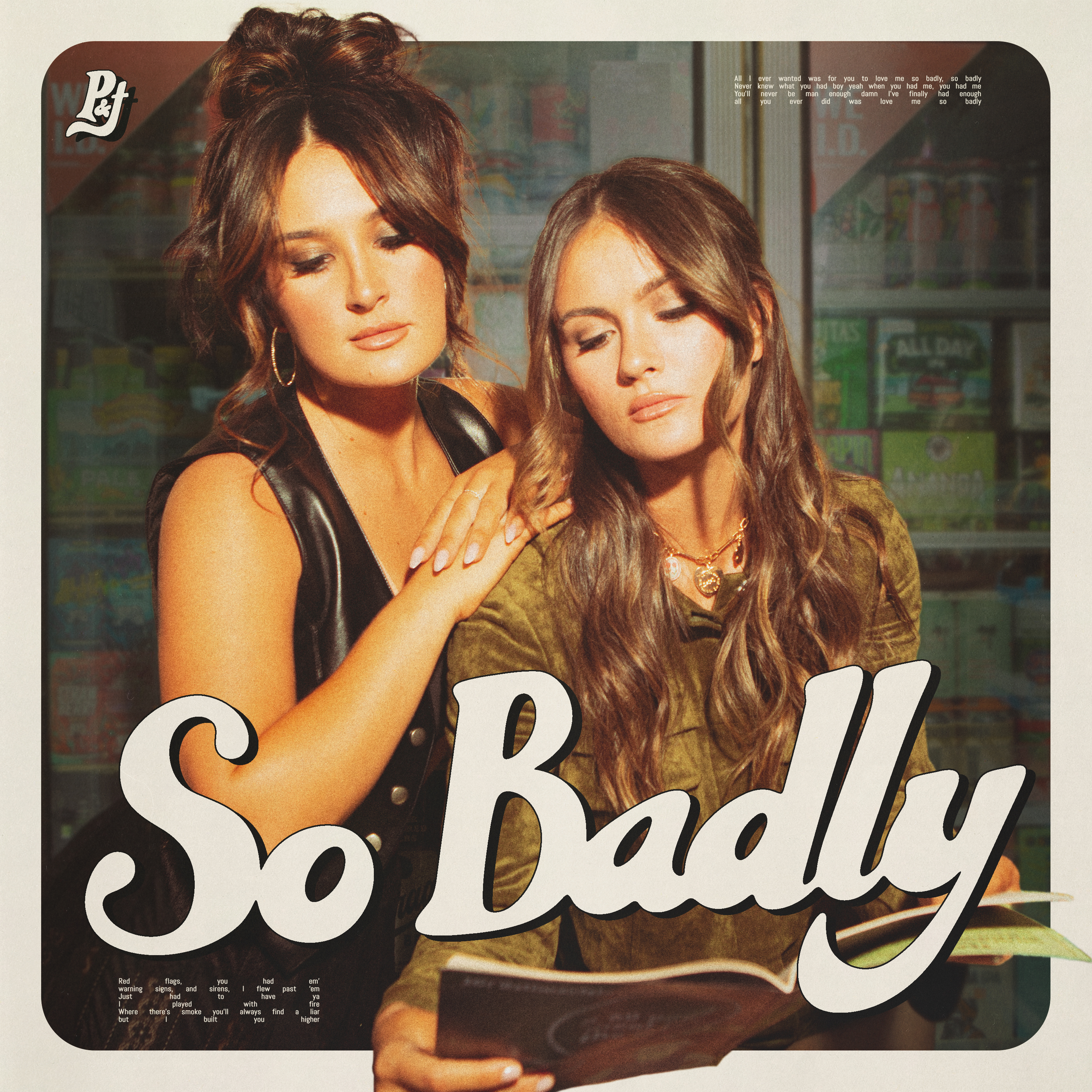
There is a darker pulse running through Presley & Taylor’s “SO BADLY,” giving the country duo a compelling new shade to explore. The sisters surround their tightly blended vocals with an atmospheric, emo-tinged production that turns a familiar relationship story into something more intimate and unsettled. Rather than simply dwelling on the end of a romance, they capture the moment when someone finally recognizes that trying harder cannot make an uneven relationship whole.
Released September 18, “SO BADLY” arrives as another preview of ACT MY AGE, the duo’s 12-song album due October 16. The project explores the disorderly stretch of life in your 20s, embracing mistakes, romantic misfires, ambition, growing pains and the lessons that tend to arrive only after experience has done its work. Within that larger picture, “SO BADLY” stands out for its emotional maturity. It does not romanticize staying too long or suggest that persistence can repair something fundamentally unequal.
Written by Presley & Taylor alongside Andrew Beason, Emma Place and Kate Zickler, the song’s most effective device is hiding in plain sight: its title. The phrase initially sounds like a request for greater devotion, but the chorus gradually changes its meaning. What seems like a wish becomes a criticism, turning the language of longing back on the person who failed to understand what they had. It is clever songwriting because the realization happens almost alongside the listener rather than being explained outright.
That economy also gives the song room to mean more than one thing. Presley & Taylor intentionally avoided tying the story to a single set of circumstances, allowing the emotional framework to remain open. Presley has connected the song to people-pleasing and the danger of allowing someone to exploit a willingness to constantly accommodate others. Taylor hears it differently, relating the sentiment to a difficult relationship with her career and the exhaustion that came from continually giving without feeling replenished.
Those interpretations deepen the track considerably. The central wound is not necessarily romantic; it is the experience of pouring yourself into something that keeps demanding more while giving less in return. A relationship can create that imbalance, but so can a career, friendship or any pursuit that gradually consumes more of a person than it gives back.
Musically, the sisters make a smart choice by resisting anything too bright or conventional. “SO BADLY” operates in a darker country space, with atmospheric production giving the song an almost emo-inflected tension. The arrangement creates enough room for the vocal performance to carry the emotional narrative, and the sisters’ harmonies provide the connective tissue. Their voices sound particularly effective against the moodier backdrop because the contrast preserves the warmth of their identity while allowing the song to explore a more unsettled emotional register.
The performance itself is refreshingly controlled. There is anger here, but it does not need to become theatrical. Instead, Presley & Taylor let the lyrics do the damage. The song feels like the aftermath of a long series of small compromises rather than the soundtrack to one spectacular collapse. That makes the eventual breaking point feel earned.
It is also a revealing piece of the larger ACT MY AGE picture. Presley & Taylor have spent years developing their sound and building their identity as a sister duo, and the forthcoming album is centered on the less polished corners of growing up. “SO BADLY” fits that direction naturally: vulnerable without becoming fragile, contemporary without abandoning country songwriting, and emotionally direct without spelling everything out.
Most importantly, the song understands that its strongest moment is not the heartbreak itself but the clarity that follows it. Presley & Taylor take a familiar emotional scenario, change the angle, and let a deceptively simple phrase carry the weight of the story. “SO BADLY” leaves its mark because the sisters do not simply sing about reaching a limit—they make that realization sound like the beginning of something better.
(Review Written By: Chad Carlson)
Latest Updates
- Single Review: Presley & Taylor - “SO BADLY”
- Single Review: Preston Cooper - “American Rust And Radio”
- Single Review: The Creekers - “Better Way”
- Single Review: Morgan Wade and John Paul White - “Old History”
- Single Review: Miranda Lambert - “Two Things Can Be True”
- Single Review: Mae Estes - “You Can Feel Bad”
- Single Review: Emily Ann Roberts - “Lonely Boy”
- Single Review: Dylan Marlowe - “In This Boat”
- #throwbackthursday: Gary Allan - "Today"
- Single Review: Danielle Bradbery - “Poetic”
- Single Review: 80 Acres & Wyatt Flores - "One More Hurt"
- Single Review: Stephen Wilson Jr. - "Cørnerman"
- Single Review: Gavin Adcock - "Rockstar Life"
- Music Video: Kelsey Hart - "Love To Be That Guy"
- Performance Video: Mack Geiger - "String By" (The Bonfire Sessions)
- Music Video: Luke Bryan feat. Luke Combs - "Finders Keepers"
- Lyric Video: Zach Meadows - "Backstreet Baby"
- Visualizer: Parker McCollum - "Solid Country Gold"
- Music Video: Kevin Powers - "Who’s Drinking Now"
- Visualizer: Mack Geiger - "Pouring"